Great Sword is the slowest weapon in Monster Hunter Wilds and carries the highest single-hit ceiling. Every fight is the same negotiation: trade mobility for damage windows, then convert those windows into a True Charged Slash on the biggest hitzone you can reach. Wilds rewires most of the moveset around Focus Mode, Wounds, and the new Offset Rising Slash, and those three additions make the Wilds Great Sword feel modern instead of clunky.
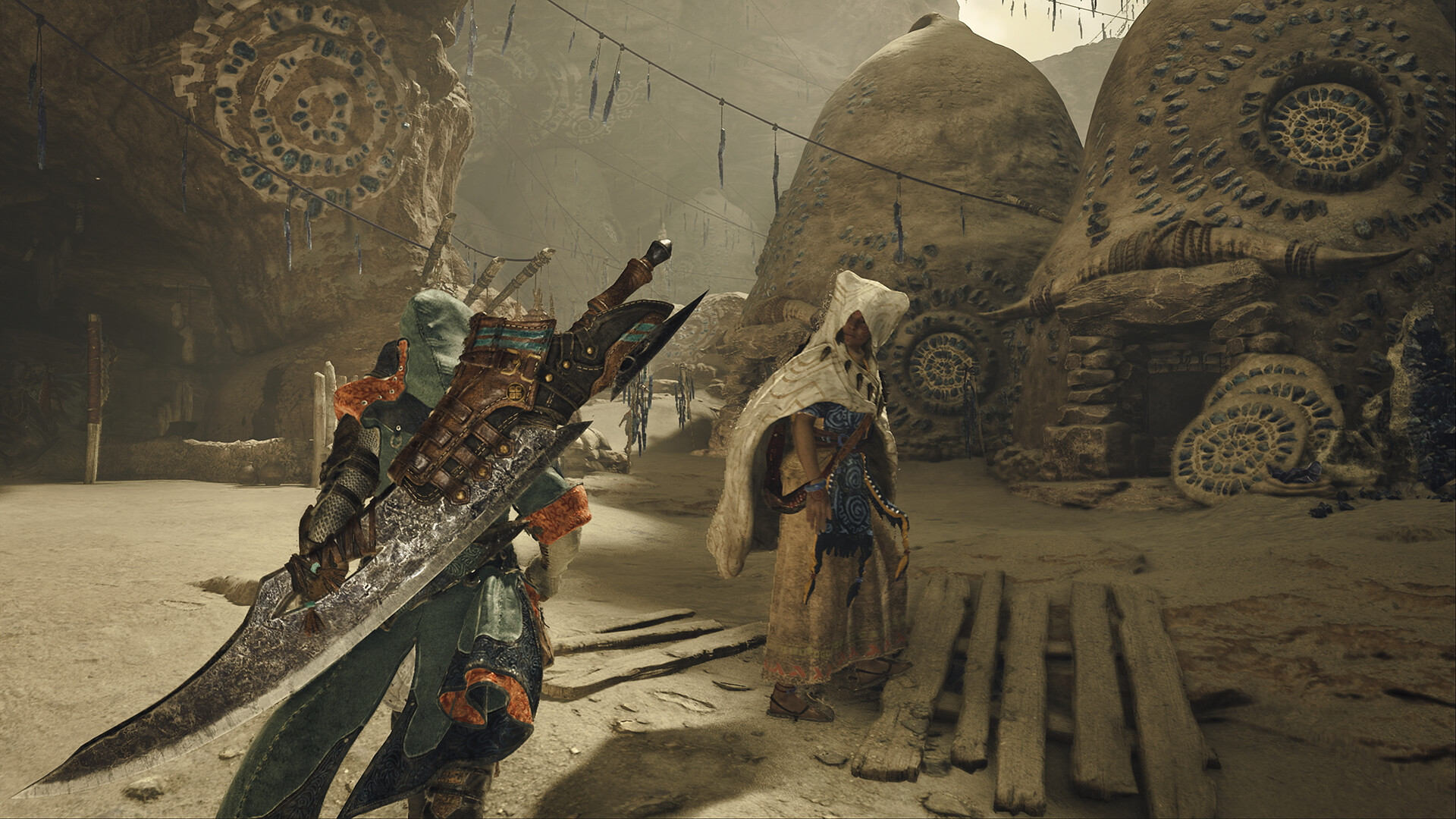
Play for the True Charged Slash. Get there by Tackle → Strong Charged Slash → True Charged Slash, or shortcut through an Offset Rising Slash parry. Use Focus Mode to turn mid-swing so TCS hits the head. Endgame skills that matter most: Weakness Exploit, Agitator, Focus, and Maximum Might.
What Great Sword is good at
Great Sword is a punish weapon. It has almost no mid-combo throughput. Every point of damage comes from committing to a wind-up and landing the payoff. Where a Long Sword player chains Spirit combos, a Great Sword player stands still, waits, then hits once for a bar of health.
That trade shapes everything else. Sheathing on time is its own skill; reading which monster attacks are punishable and which end you outright is the whole learning curve. In exchange you get single hits no other weapon in Wilds can match, plus a moveset that eats wounds and staggers heads faster than most of the meta.
- Best at: big commit windows like downed monsters, sleep wake-ups, Wound bursts, mounted monsters, telegraphed Elder Dragon roars.
- Worst at: fights that never stand still (Nu Udra tentacle phases, Arch-Tempered speed-checks), party runs where somebody else is drawing all the aggro and the monster keeps rotating.
- Ceiling vs. floor: low mechanical ceiling, high knowledge ceiling. You need few buttons; you need to know when to press them.
Core moveset in Wilds
The moves you use in a hunt are a small set. Everything else is filler between them.
- Charged Slash → Strong Charged Slash → True Charged Slash (TCS). The primary damage line. Release each stage when the hunter flashes red. Hit the timing, not the button. TCS is the biggest single hit in the game.
- Tackle. Wilds keeps the classic hyperarmor shoulder-check. It interrupts your own charge to stand ground through a monster attack, keeps you upright through roars, and chains straight back into the next charge stage. Every TCS in a real fight comes off a tackle at least once.
- Offset Rising Slash. New in Wilds. Timed against an incoming physical attack it parries, staggers the monster, and unlocks a Follow-up Cross Slash that pipes straight into the True Charged Slash chain. This is the fastest legitimate path to a TCS without a downed opening.
- Focus Slash: Perforate. The Great Sword's Focus Strike (used in Focus Mode over a Wound). The sword drags across the wound, and if the monster has more than one wound in the drag line, Perforate bursts them all. It also flows straight into a True Charge Strike, so a good wound cluster becomes its own TCS setup.
- Wide Slash and Overhead Slash. Combo glue. Wide Slash is the recovery move most speedrun combos route through on the way back to a full charge.
- Jumping Wide Slash. Off ledges and mounts. Not a main damage tool, but useful on Wilds's continuous open-world terrain, and it sets up mounts.
Focus Mode, Wounds, and Artian rolls
Three Wilds systems change how Great Sword plays compared to World or Rise.
Focus Mode aiming
Hold the Focus Mode input and your charged attacks steer. Guide sites agree you can rotate roughly 180 degrees during a True Charged Slash, enough to salvage a swing when a monster rolls or turns away mid-charge. Reserve Focus Mode for the wind-up of Strong Charged Slash and TCS, when the monster is about to shift.
Wounds and Perforate
Wilds monsters accumulate glowing red Wounds on parts you keep hitting. Any weapon can burst them with its Focus Strike, but Great Sword's Perforate is one of the few that (a) sweeps multiple wounds in a single input, and (b) chains straight into a follow-up True Charge Strike. So don't open a fight with TCS. Open by racking wounds with charged slashes, then convert the set with one Focus Slash: Perforate → TCS.
Artian roll priorities for Great Sword
Great Sword is a raw-damage weapon: your hits are so large that flat attack scales harder than the equivalent affinity or elemental infusion. Endgame builds agree on the priorities:
- Three Attack Infusions. Universal: flat raw is the highest-value modifier on a per-hit weapon.
- Four Attack Boost reinforcements, one Sharpness Boost. Sharpness matters because dropping a tier mid-hunt turns a TCS into a bounce; one sharpness roll keeps you in the top color longer.
- Infusion element: Sleep is the current pick. Great Sword carries the highest hit motion value in the game, which makes it the best weapon for sleep wake-up cash-ins in party hunts. Solo, a status infusion is a soft downgrade. Pick your element to match the fight.
Best skills for endgame
Great Sword's endgame skill tree is short and stable. Nothing here is exotic; it's the standard raw-damage stack tuned for a weapon that lives or dies by single hits.
- Weakness Exploit (max). Universal top skill; extra critical value on weak zones and on wounds. Great Sword hits weak zones almost exclusively, so it captures the full benefit.
- Agitator (max). Zoh Shia and the Arch-Tempered rotations stay enraged for most of a fight. Agitator runs near-permanent uptime in those hunts.
- Focus. Cuts charge time. Every skill point translates directly into more TCS attempts per opening.
- Maximum Might. Free affinity while your stamina bar is full. Great Sword rarely spends stamina. This is nearly free damage if you're not sprinting between windows.
- Counterstrike / Burst. Damage after taking a hit and after a sustained combo respectively. Both stack cleanly with the punish rhythm.
- Slugger. Optional but strong on Great Sword because most of your hits land on the head; more stuns means more free TCS windows.
Focus/Handicraft is the priority decoration slot. After that, build whichever of Agitator, Maximum Might, or Weakness Exploit your armor pieces haven't capped.
Best matchups from Wilds's roster
Great Sword grades well against monsters that leave long, honest openings and grades poorly against monsters that keep moving. The examples below are a starting map; per-monster deep dives live in their own guides.
- Great matchup: Zoh Shia. Phase 4 parks the head still after every big commit. TCS on an exposed Zoh Shia head is one of the highest damage-per-window openings in the game. Bring a Dragon or top-shelf raw Artian.
- Great matchup: Gogmazios. Massive body, long telegraphed attacks, huge downed windows. Great Sword's TCS eats through its exposed hitzones fast.
- Great matchup: Arkveld. Predictable telegraphed attacks and the Wound-heavy design that Perforate was built to punish. Multi-wound Perforate → TCS is the archetypal Wilds Great Sword combo here.
- Fine matchup: Rey Dau. Long charge-up telegraphs on its lightning shots give clean TCS windows; sheathe and reposition when it starts strafing.
- Weaker matchup: Uth Duna. Weak to bludgeoning first, slashing second. Hammer clears faster. Great Sword works, but you pay the "wrong damage type" tax, and Uth Duna's veil cuts incoming damage until you break it.
- Weaker matchup: Nu Udra. Multi-tentacle fights refuse to sit still for a full TCS charge. Prefer a mobile weapon.
Common newbie mistakes
- Trying to True Charged Slash cold. A raw TCS wind-up is over two seconds. Almost no monster stands still that long. Every real TCS comes off a knockdown, a Tackle, an Offset parry, or a Perforate follow-up.
- Never using Tackle. Tackle is not a damage move. It's how you stay upright through a roar or a swipe while keeping your charge state. If a monster knocks you out of every combo, you're skipping tackle.
- Ignoring Offset Rising Slash. The fastest legitimate way to a TCS in a live fight. Practice the timing on the first monster you fight with an honest telegraphed swing.
- Blowing Perforate on empty parts. Perforate scales with the wounds it drags across. One fresh wound? Focus Slash it. Three wounds clustered? That's the payoff moment, not the setup moment.
- Refusing to sheathe. Great Sword mobility with the weapon drawn is bad on purpose. Sheathing to reposition is strength, not weakness. It's the correct move nine times out of ten.
- Guarding by default. The Wilds Great Sword can guard, but its block chip is heavy and it eats stamina fast. Offset first, guard as a last resort.
- Reading Focus Mode as a movement option. Focus Mode aims your charged attacks. It is not a dodge and it does not speed your movement. Hunters who hold it constantly get locked into swings they shouldn't commit to.
For this guide we consulted the Capcom official Monster Hunter Wilds page, the Game8 Monster Hunter Wilds wiki (moveset, combo motion values, Wound and Focus Slash mechanics, endgame skill priorities), community endgame build write-ups on Icy Veins, DotGG, and Mobalytics (Artian roll priorities, skill stacking, Sleep infusion pick), and player discussion on Reddit and Discord.